
One of the most common mistakes I see in both channel sales and direct sales is assuming that the person you’re dealing with is influencing the outcome.
Sometimes they are. Many times, they’re not.
As organisations grow, decision-making becomes more complex. The person with the problem isn’t always the person who controls the budget. The person who controls the budget isn’t always the person who owns the risk. And the person with the authority to approve the project may not appear until surprisingly late in the buying process.
That’s why stakeholder mapping is such an important skill.
A simple approach is to think about stakeholders across two dimensions: influence (who can move a project forward) and interest (who cares about the outcome):
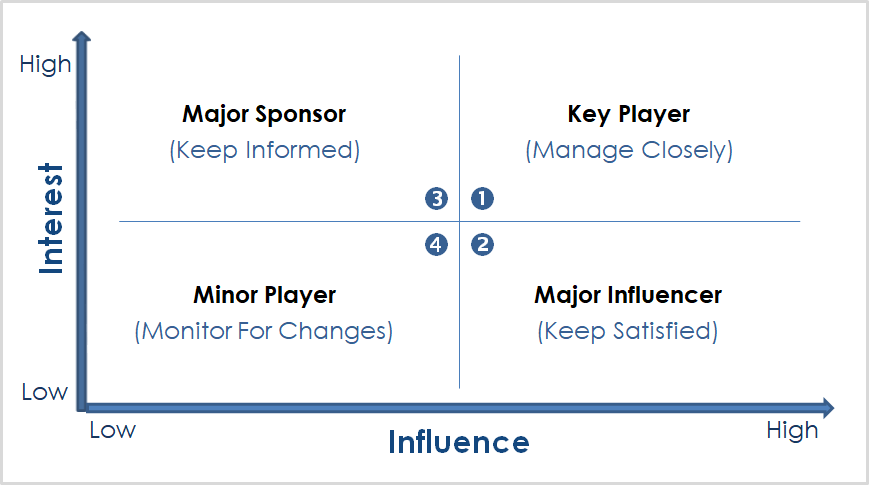
1. Key Players (High Influence, High Interest)
These are the people most salespeople gravitate towards. They understand the problem, care about the outcome, and have the influence to drive progress. If you’re a vendor, this might be a partner owner looking to build a new practice. If you’re an MSP, it might be an IT Manager championing a project.
2. Major Influencers (High Influence, Low Interest)
This is the most dangerous group. They have the ability to influence the outcome but are focused on something else. A services manager may be trying to replace two key engineers who just left. A CFO may be more concerned about relocating the office. An operations executive may be dealing with a leaking roof. They’re not necessarily against your proposal. They simply have other priorities. And that can influence whether yours proceeds.
3. Major Sponsors (Low Influence, High Interest)
These stakeholders care deeply about the project and are often your strongest advocates. They can provide information, introductions and insights, but they don’t have the authority to approve the project. However, you can use them to help persuade those who do.
4. Minor Players (Low Influence, Low Interest)
Most people in an organisation fall into this category. They require relatively little attention, but they shouldn’t be ignored completely. Stakeholder positions change, and today’s Minor Player can become tomorrow’s Major Influencer. Monitor them for change.
The mistake I see most often is salespeople spending all of their time with Key Players and Major Sponsors because those stakeholders are engaged and easy to work with. Meanwhile, the Major Influencers remain largely untouched. That’s where projects often come unstuck.
Using AI to Improve Your Stakeholder Mapping
The real value of stakeholder mapping isn’t identifying stakeholders. It’s understanding what matters to them.
Most salespeople are comfortable talking to Key Players and Major Sponsors because they share a common interest in the initiative. Major Influencers are different. They often care about things that sit well outside the salesperson’s area of expertise.

This is where AI can help. It can assist with both identifying stakeholders, and developing the messaging that resonates with them.
Start by asking AI to identify stakeholders you may have overlooked. Describe the opportunity, the organisation and the people involved, then ask, “Who else is likely to influence this decision?” More importantly, ask AI to help you understand their priorities. “What are the likely concerns of a services manager?” “What would a CFO want to see before approving this project?” “How might an operations executive evaluate this proposal?”
The answers won’t always be perfect, but they will often highlight issues you hadn’t considered and help you tailor your message to each stakeholder group.
Summary
The best salespeople and Channel Account Managers don’t just understand their solution. They understand the people involved in the decision. Because deals rarely fail because of the stakeholders you know. They usually fail because of the stakeholders you haven’t identified yet.